
By: Reilly Buselli
The first couple of weeks of October are widely known as Banned Book Week by authors, teachers, and librarians globally. These weeks highlight the harm of book censorship, celebrate the freedom to read, and bring together authors and readers alike. Many countries have famously banned books that have themes of treason, rebellion, or what they call “propaganda.” Countries that have or had strict book bans include China, Russia, and Nazi Germany, but recently the United States has joined that list, banning or challenging over 5,000 books in 2025 alone. Many of these titles were restricted in individual schools for “inappropriate themes”, but some have been challenged nationwide.
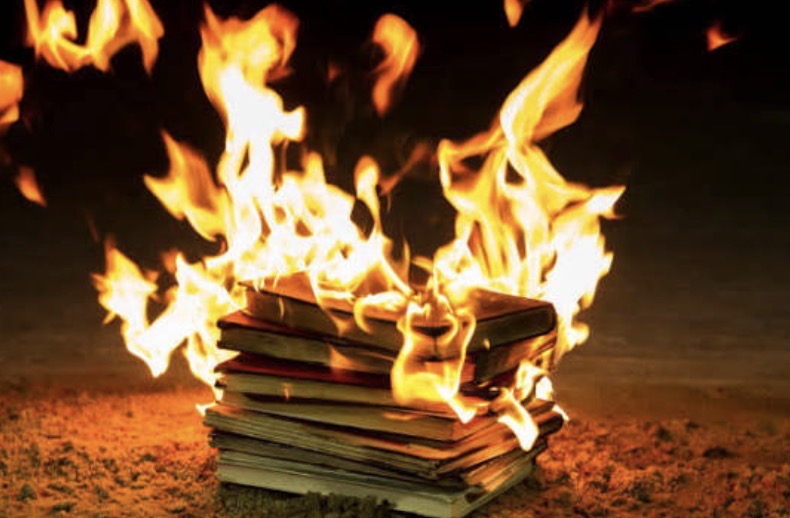
Historically, one of the most famous and drastic book restrictions was in 1933 when Germany began burning books that they deemed “un-German.” This event marked Germany’s change from a democracy to a dictatorship, which became the catalyst for the first major internal rebellions against the German government.
In the United States of America, we have certain freedoms that are protected by our First Amendment and our Constitution. These freedoms include the freedom of speech and the freedom of press which allows authors to write whatever they want without the government interfering. There are, however, exceptions to this. This freedom applies to public government entities, so private schools and libraries can censor whatever they deem appropriate to restrict. In the 1982 trial Board of Education v. Pico, the Supreme Court ruled that school boards have broad discretion over curriculum, but they cannot ban books just because they dislike or disagree with the ideas that they contain.
Some of the most popular challenged books in the United States today are Harry Potter, The Outsiders, To Kill a Mockingbird, The Great Gatsby, 1984, and The Book Thief (a book about a girl in Nazi Germany who fears for her life as she steals and reads books that were banned during the infamous books burnings).
At Wallenpaupack, we exercise our First Amendment rights by reading many of these challenged books in our classes. At The Paupack Press, we have a weekly book review where we have reviewed many of these same books. It is imperative that we never lose sight of the importance of our education, our expression, and our individual opinions. We are lucky to live in a country that has protected these rights in its very foundation, but we also must work to keep these rights protected by expressing ourselves, accepting the opinions of those we disagree with, voting, and continuing to read.