
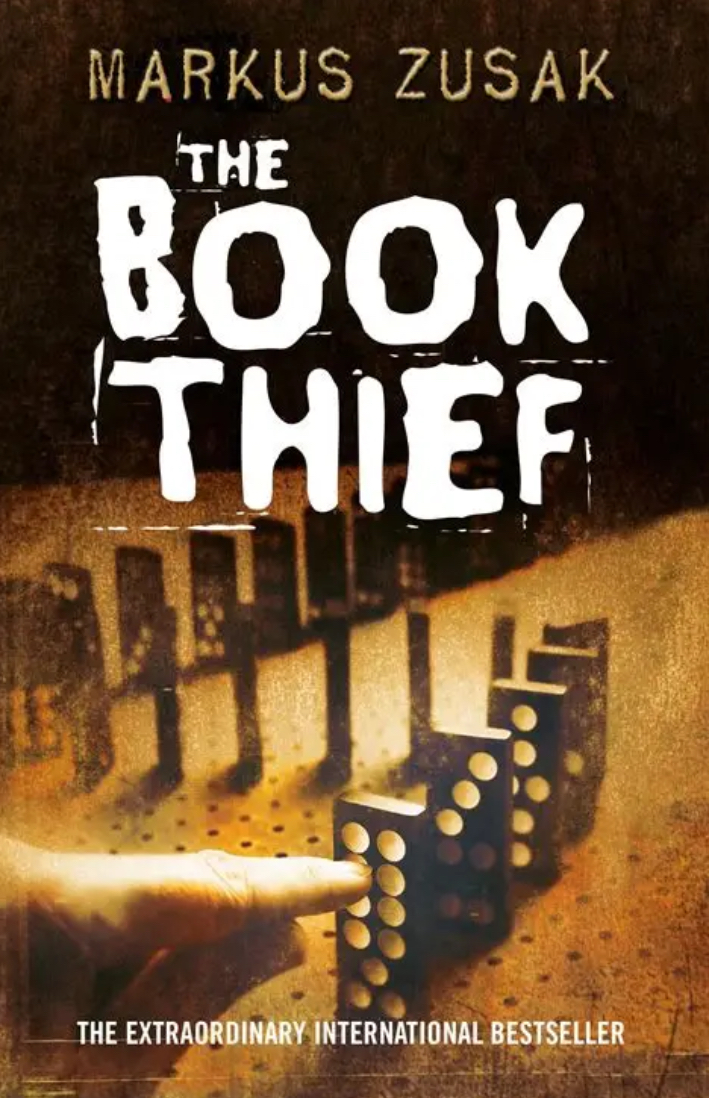
Book by: Markus Zusak
By: Reilly Buselli
In The Book Thief, Markus Zusak uses his riveting writing style and unusual point of view to tell the story of a girl who endured the worst parts of World War Two. Zusak writes from the point of view of death itself, narrating the life of Liesel Meminger. From an early age, Liesel discovered that books could be a much-needed escape for her, even before she learned to read. With so much death surrounding her, she finds comfort in her chosen family who foster her love of words and help her understand how to use them for good.
Liesel’s love of books began at her little brother’s funeral when she was nine years old. Her brother had unfortunately passed away on their journey to their new foster parents’ home. At his funeral, Liesel stole her first book, opening up a new world of literature that she had never been exposed to before. She couldn’t read this book but just possessing it was enough of a thrill for her.
Liesel had a poor first impression of her foster parents. Her mother, Rosa Hubermann, came off too abrasive, and her harsh vocabulary made it seem like her only emotion was anger. Her father, Hans, was the complete opposite of Rosa. He appeared too mellow, appearing to passively tolerate Rosa’s verbal abuse instead of standing up for himself. Over time, Liesel realized that beneath their rough exteriors were people who cared for her deeply and wanted nothing but the best for her.
As Liesel grew more comfortable with the community she was living in, she began to make friends with kids her age in the neighborhood. Her best friend became Rudy Steiner, a boy with aspirations to run in the Olympics. As the war escalated, Liesel’s family took in a Jewish man, Max Vandenburg. He moved into their basement, adding to the tension of the story as Liesel’s family risked their life to keep him safe. He and Liesel bonded over a shared love for words and literature.
World War Two was a brutal time full of deception and death, especially in Germany. Liesel survived the war, but she knew many who didn’t. She took these experiences and wrote down everything she could. Liesel’s story truly reflected the power of words and the importance of sticking to your morals no matter the situation. She lived through a time when her government twisted and manipulated words to show the public a picture that they wanted them to see. Liesel was encouraged throughout her life to read, write, and believe what she wanted to, no matter the cost.
Markus Zusak defies literary norms by writing from a unique point of view. He writes from the point of view of death itself, a theme that was undeniably common in Liesel’s life. As Zusak commented, “When death has a story to tell, you listen.” Zusak not only redefines how we view life and death but also keeps readers thinking long after they turn the last page.